West Kerry Museum, Ballyferriter
Ogham Stones, Cross Slabs, Rock Art
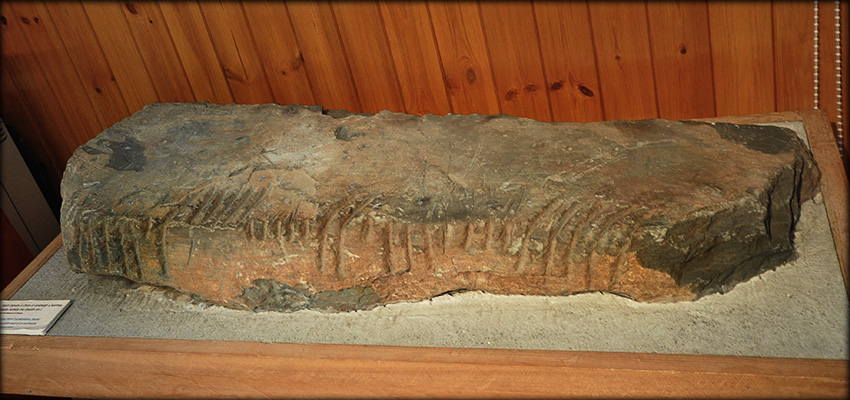
We had been meaning to visit the museum on a few trips to the Dingle Peninsula but as always we had too many other places to explore. We were determined to stop by on this occasion and were well rewarded. Amongst the artifacts on display are five ogham stones, several cross inscribed slabs, plus a number of quern stones and the wonderful rock art pictured at the bottom of this page. The ogham stone, pictured below, was found in 1989 built into the gable wall of an outhouse in Coumlanders townland, near Annascaul. The original site of the stone is not known, therefore it is named after the townland in which it was discovered. The inscription reads "RETAGIN MAQI DOV[U!][--" The Ogham in 3D website translates it to - 'of Rethgan son of Dub-?'
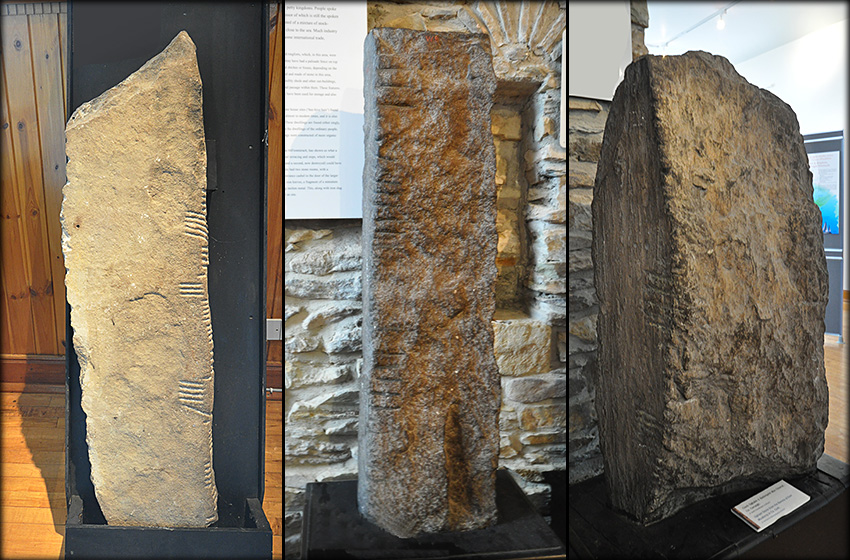
The first two stones pictured below were found in Lougher. It is believed they both come from a souterrain in Rathmalode. The stone on the left, known as Rathmalode No 2 was re-used in Lougher as a lintel in an outhouse. Rathmalode No 2 reads "ERCAVICCAS MAQI CO[--" it has been suggested this may date the stone to the first half or early second half of the fifth century. The stone in the centre is known as Rathmalode No 1, it was used as a lintel in a cottage and the inscirtion reads "CURCI MAQI MUCOI V--" meaning 'of Corc son of the descendant of V?' The stone, pictured below right, marked East Muskerry in the museum is actually known as Ballyhank Ogham Stone No 2. It was found along with five others in a souterrain in Ballyhank Townland in the Parish of East Muskerry, County Cork. The stone reads"CORBAGNI K[O][I] M[A]Q[I] MOCCOI COROTANI" meaning 'of Corbán here? son of the descendant of C?'
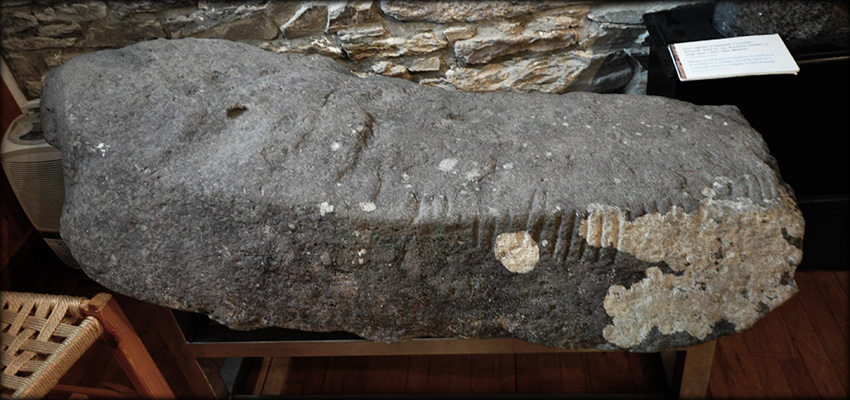
The Emlagh West ogham stone, pictured below, was also found acting as a lintel or jamb stone in the entrance to a souterrain inside a rath in that townland. The stone, which is partly broken, reads"TALAGNIMAQI...."
Cross Slabs
We were delighted to see several gorgeous cross slabs also present in the museum. Some of these slabs or decorated stones came from the ecclesiastical site at Reask. These incribed stones are known as Reask stone (E), (H) and (G). Stone E, shown below left, is a sandstone slab decorated with a Greek cross and plain stem, in the upper angles are two crosslets. The fret and interlace designs were added later. Stone G was found in the oratory, it bears a Maltese cross within a circle, below the circle is a symmetrical fret pattern. Stone H was reused as part of a grave within the oratory at Reask. It bears a Maltese cross. A peacock may be depicted in the upper right-hand corner. The fourth stone, pictured below stone g, was found near Ballyferriter and then lost, It was rediscovered at a school in Dingle, acting as a drain cover. It bears a cross within a mishaped circle, with a curved stem ending in a triangular terminal.
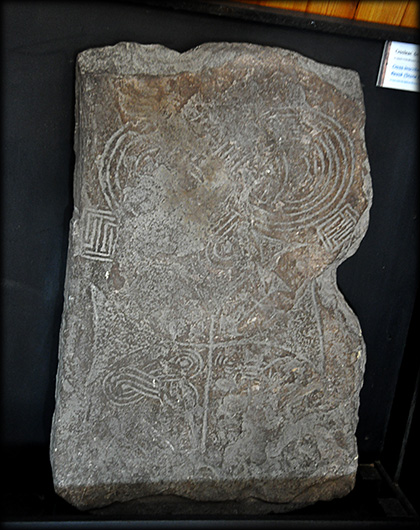
Reask stone (E)
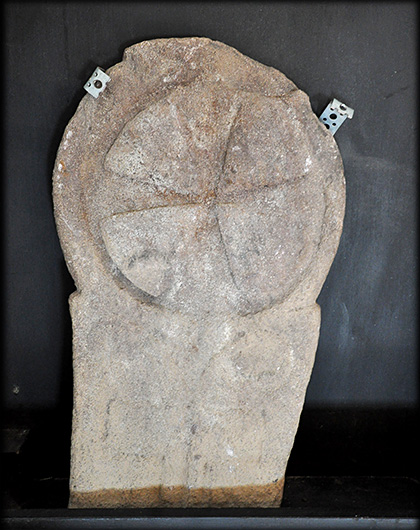
Reask stone (G)
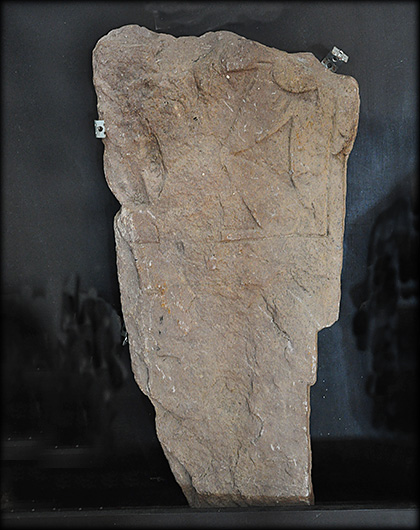
Reask stone (H)
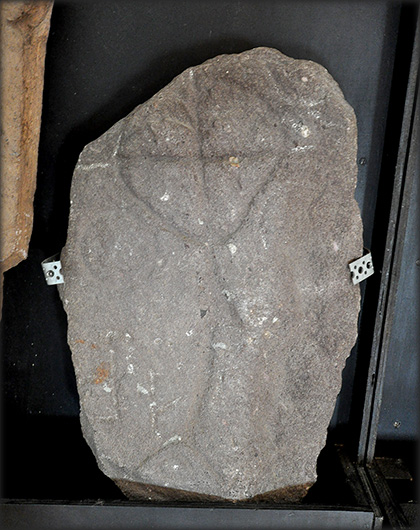
Cross slab found near Ballyferriter
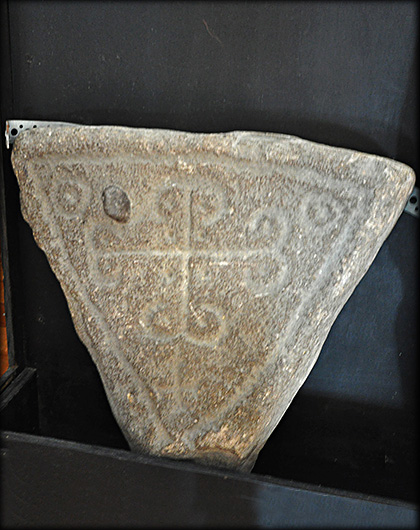
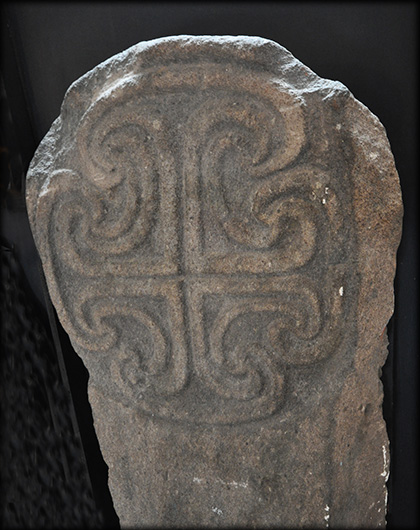
Ardamore decorated pillar
Rock Art
The rock is 1.2 metres long with a large cup-and-3 circles and a radial line running from the centre of the cup plus several other cup marks. It was found on the slopes of Knocknakilton. A second larger stone bearing rock art is still in the original location.
Situated: In the centre of Ballyferriter on the western side of the main road. Sign-posted Músaem Chorca Dhuibhne. Open from Easter to September.
Discovery Map 70: Q 3539 0435. Last visit Sept 2012.
Longitude: 10° 24' 22" W
Latitude: 52° 9' 59" N
Photos: Jim Dempsey and Deb Snelson.
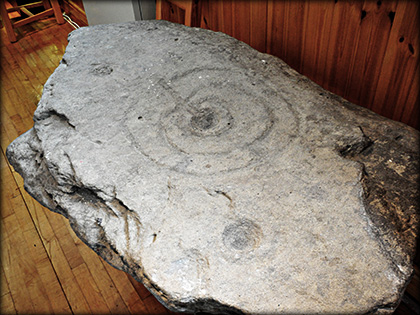
Lougher bronze age rock art
Fanning, T. “Excavation of an Early Christian Cemetery and Settlement at Reask, County Kerry.” Proceedings of the Royal Irish Academy. Section C: Archaeology, Celtic Studies, History, Linguistics, Literature, vol. 81C, 1981, pp. 67–172.
Ref: Ogham in 3D